Prison Facility — 50 Cells
Secure building services and cell-level verification
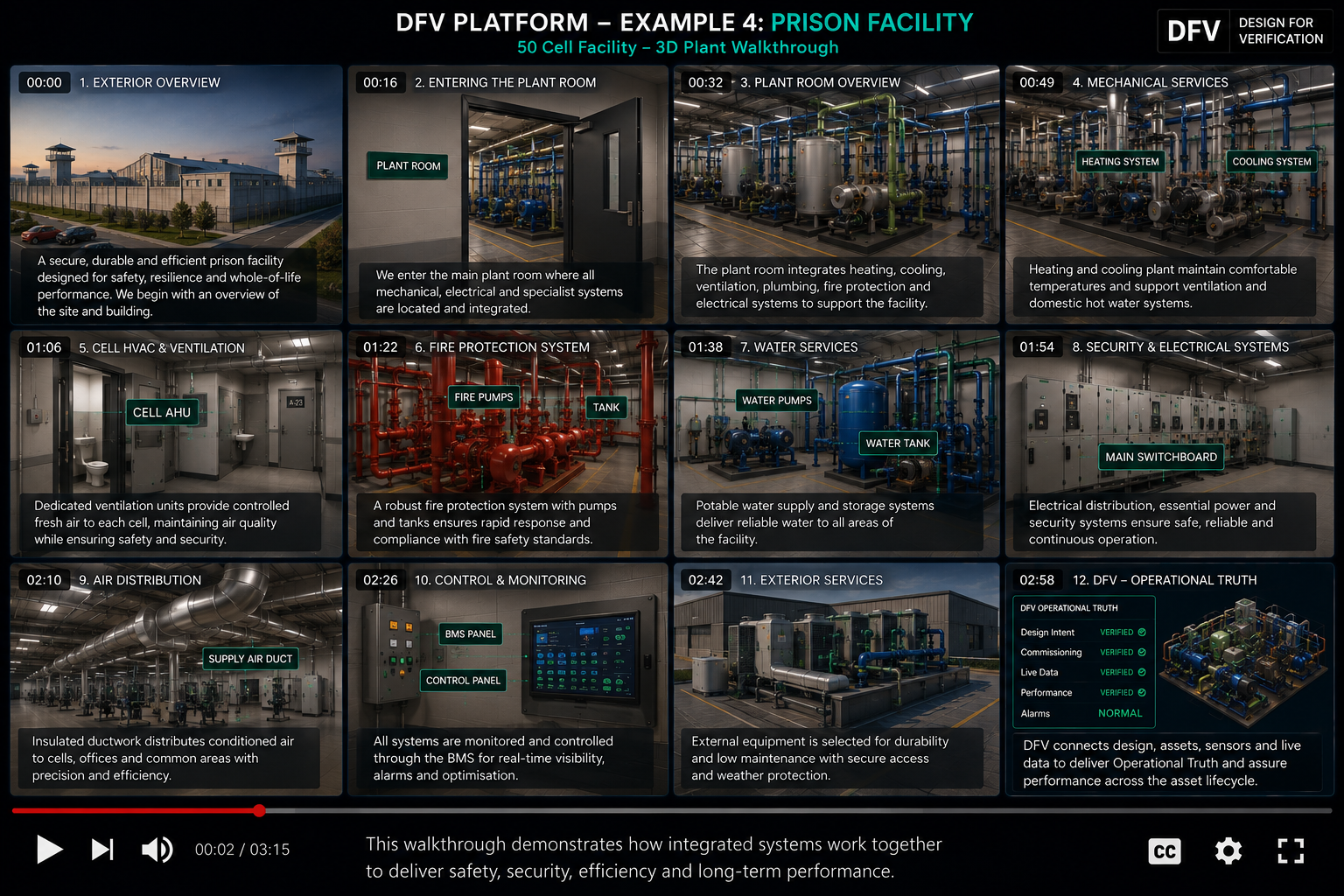
Plant overview
- Central heating and DHW
- Cell ventilation
- Motorised DHW isolation per cell
- Lighting/security interfaces
- Fire, electrical and BMS integration
DFV connects each design requirement to identifiable assets, sensors, tests, documentation and operational evidence.
How it works
The system architecture is presented as connected engineering functions rather than isolated equipment. Plant, distribution, controls and end-use conditions are linked through a structured DFV evidence chain.
Lifecycle purpose
Commissioning evidence establishes the initial verified state. Operational data and governed change management support later re-verification.
Engineering sizing basis
Heating, ventilation and DHW follow occupancy, envelope, airflow, fixture demand and diversity. Security-critical devices add fail-safe, authorised-control, isolation and proven-state requirements.
All figures shown in the demonstrations are concept/reference duties unless explicitly identified otherwise.
Reference basis
Applicable editions, project specifications, authority requirements and specialised standards must always be confirmed for a real project.
What DFV verifies
- Correct valve-to-cell identity
- Commanded vs proven valve state
- Ventilation and room conditions
- Fire/security cause-and-effect
- Maintenance and commissioning evidence